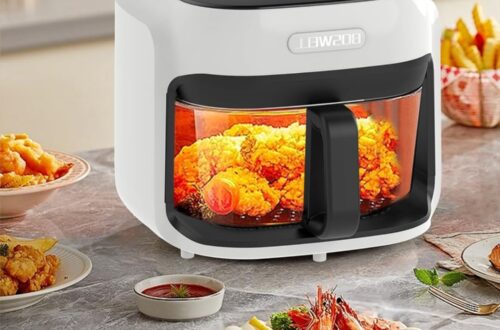
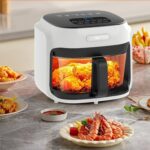
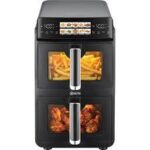


Cooking for a family or a busy household often means juggling multiple dishes at once, timing them so everything lands on the table warm and ready together. That balancing act is one of the main reasons dual-zone air fryers have become such a common fixture in kitchens over the past few years. Among the many configurations available, the 12QT double air fryer with two stacked racks represents a design aimed squarely at people who need more cooking capacity without giving up the speed and convenience that air frying is known for.
This article walks through what this type of appliance typically offers, how it fits into everyday cooking routines, who tends to benefit most from it, and what to think about before deciding whether it’s the right addition to your kitchen.
What Is a Dual Basket Air Fryer, Exactly?
A dual basket air fryer is essentially two air fryers built into a single unit, each with its own heating element, fan, and cooking chamber. Instead of one basket doing all the work, you get two independent compartments that can run at different temperatures and times simultaneously. In the case of a 12-quart model with stacked racks, the design usually splits the total capacity across two vertically or side-by-side arranged drawers, giving you room to cook larger portions or multiple dishes at once.
The stacked rack feature adds another layer of flexibility. Rather than being limited to a single flat cooking surface per basket, the racks allow food to be arranged on more than one level, which can be useful for items like vegetables, chicken wings, or reheated leftovers where airflow around the food matters less than raw capacity.
Key Features to Understand
Touchscreen Controls
Many newer air fryer models, including larger dual-basket units, have moved away from mechanical dials toward digital touchscreen interfaces. This typically allows for more precise temperature and time adjustments, along with a cleaner, more modern look on the countertop. Touchscreens often display current cooking status for each basket independently, which becomes especially useful when running two different recipes at once.
6-in-1 Preset Functions
Preset cooking modes are designed to take some of the guesswork out of temperature and time settings for common cooking methods. A typical set of presets on this kind of appliance might include options such as air fry, roast, bake, reheat, dehydrate, and broil-style functions. These presets are generally starting points rather than fixed rules — actual cooking times can still vary depending on the type and quantity of food, so occasional adjustment is often needed.
Sync and Match Functions
This is one of the more distinctive features of dual-basket models. The “Match” function typically mirrors the settings from one basket to the other, so both sides cook identically — useful when you’re preparing a large batch of the same food and want it split across two baskets for even cooking. The “Sync” function, on the other hand, allows two different foods with different cooking times to finish at the same moment, even if they require different temperatures or durations. This means, for instance, that a protein needing a longer cook time and a vegetable needing a shorter one could both be started at once and still be ready together.
Roast Setting
The roast function is generally intended for foods that benefit from a steadier, more consistent heat over a longer period, such as root vegetables or whole cuts of meat. It’s a helpful distinction from standard air frying, which tends to run hotter and faster for crisping.
Dishwasher-Safe Components
Cleanup is frequently cited as one of the more tedious aspects of using air fryers, particularly after cooking anything greasy or heavily seasoned. Removable, dishwasher-safe baskets and racks can simplify this process considerably, cutting down on the hand-scrubbing that some non-stick coatings require.
Large-Capacity Design
At 12 quarts total, this type of unit is built with larger households in mind. It’s meant to reduce the need for multiple cooking batches, which can be a common frustration with smaller single-basket air fryers when preparing meals for four or more people.
How This Type of Air Fryer Can Be Used
The versatility of a dual-basket design opens up a number of practical cooking scenarios beyond the basic “toss in some frozen fries and go” use case.
Weeknight meal prep for multiple dishes. One basket could handle a protein like chicken thighs or salmon while the other works through a side of roasted vegetables, using the Sync function to have both finish together.
Batch cooking for the week ahead. Using the Match function, the same recipe can be doubled across both baskets, which is particularly helpful for anyone prepping lunches or freezer meals in advance.
Entertaining or family gatherings. When cooking for a larger group, having two independent baskets means you’re not stuck reheating a single batch of appetizers multiple times.
Dietary accommodations within one household. Because each basket runs independently, it’s possible to prepare two different meals at once — for example, a lower-carb option in one basket and a more traditional side in the other — without needing separate appliances or extended cook times.
Reheating and repurposing leftovers. The stacked rack system can allow smaller portions of leftovers to be reheated with better air circulation than simply piling everything into one flat layer.
Dehydrating snacks or ingredients. If the preset options include a dehydrate function, the appliance can also be used for slow-drying fruits, vegetables, or homemade jerky, which is a different use case entirely from typical air frying but adds to the appliance’s overall utility.
Who This Type of Air Fryer May Be Suitable For
Larger dual-basket air fryers tend to appeal to a fairly specific set of household needs, though the exact fit will depend on individual circumstances.
- Families with four or more members, where single-basket air fryers often require multiple cooking rounds to feed everyone.
- People who meal prep regularly and want to cook larger quantities in fewer sessions.
- Households with mixed dietary preferences, where being able to cook two different foods simultaneously reduces the need for separate cooking equipment or staggered meal times.
- Anyone looking to reduce reliance on a conventional oven for everyday cooking, particularly during warmer months when running a full-sized oven can add unwanted heat to a kitchen.
- Home cooks who value convenience features, such as programmable presets and touchscreen interfaces, over more manual, dial-based appliances.
That said, this style of appliance may be less practical for individuals or couples with more modest cooking needs, simply due to its larger physical footprint and capacity, which we’ll touch on more below.
Important Things to Consider Before Choosing This Type of Appliance
Counter and Storage Space
A 12-quart dual-basket unit is, by nature of its capacity, a larger appliance. Before purchasing, it’s worth measuring available counter space, as well as considering whether it will be a permanent countertop fixture or something that needs to be stored away between uses. Cabinet clearance and ventilation space around the unit during operation are also practical details to check against the specific product dimensions.
Learning the Presets
While preset functions are designed to simplify cooking, they are calibrated based on general assumptions about food type and quantity. Actual results can vary based on how much food is in the basket, whether it’s fresh or frozen, and personal texture preferences. It often takes a few uses to understand how the presets perform with the specific foods a household cooks most often.
Cleaning Habits and Maintenance
Even with dishwasher-safe parts, air fryers generally benefit from regular cleaning to prevent the buildup of oil residue, particularly around heating elements and fan areas that aren’t always dishwasher accessible. Wiping down the interior chamber by hand periodically is typically still recommended alongside dishwasher cleaning of removable parts.
Power Consumption
Larger air fryers with dual heating elements can draw more electricity than smaller single-basket models, particularly when both baskets are running simultaneously. This is generally not a major concern for occasional use, but households that plan to use the appliance daily may want to factor this into their overall kitchen appliance energy use.
Noise Level
Air fryers rely on internal fans to circulate hot air, and larger dual-zone models with two fans may produce more ambient noise than a single-basket counterpart, especially when both compartments are active at once.
Comparing General Categories of Air Fryers
To put dual-basket models into context, it helps to look at how they generally compare to other common air fryer categories, without singling out any particular brand or product.
Single-basket air fryers are typically more compact and suited to individuals, couples, or smaller households. They tend to take up less counter space and can be more budget-friendly, but they usually require cooking in batches when preparing larger meals or multiple dish types.
Oven-style or toaster-oven air fryers often provide even more interior capacity and sometimes include rotisserie functions, but they can be bulkier and may take longer to preheat compared to basket-style units.
Dual-basket air fryers, as covered in this article, sit in a middle ground — offering more capacity and flexibility than single-basket models while generally remaining more compact than full oven-style units. Their defining advantage is the ability to run two independent cooking zones at once, which single-basket models simply cannot replicate.
Each category serves a different kind of kitchen need, and the right choice generally comes down to household size, available space, and how often multiple dishes need to be prepared at the same time.
Frequently Asked Questions
Can both baskets be used at different temperatures at the same time? Yes, this is typically one of the core features of dual-basket designs. Each basket generally operates independently, allowing different temperatures and times to be set for each side.
Does the Sync function require the same type of food in both baskets? No, the Sync function is generally designed for the opposite scenario — cooking two different foods with different time requirements so that they finish at the same moment, even though they may need different settings.
Are the stacked racks necessary, or can the baskets be used without them? The racks typically function as an optional accessory to increase cooking surface area within each basket. They’re generally most useful for smaller or flatter foods, while larger items may still be cooked directly in the basket without the racks.
How much food can a 12-quart dual air fryer typically hold? Capacity will vary depending on how it’s distributed between the two baskets, but a combined 12-quart capacity is generally considered suitable for preparing meals for four to six people, depending on the specific foods being cooked.
Is preheating necessary? This can depend on the specific preset being used and the type of food. Some presets may include an automatic preheat phase, while others may not require it. Checking the accompanying instructions for each specific preset is generally recommended.
Can parts other than the baskets go in the dishwasher? This typically depends on the specific components, such as racks or trays. Manufacturer guidance should be checked for confirmation, as not all internal parts are necessarily dishwasher-safe.
Conclusion
Dual-basket air fryers with larger total capacities, such as 12-quart models with stacked racks, are generally designed to solve a specific problem: cooking efficiently for more people without sacrificing the speed and convenience that make air fryers appealing in the first place. Features like touchscreen controls, multiple presets, and Sync/Match functions are aimed at giving home cooks more flexibility in how they plan and execute meals, whether that means batch-cooking the same dish across both baskets or preparing two entirely different foods at once.
As with any kitchen appliance, the right choice ultimately depends on individual needs — household size, available counter space, and how often multiple dishes need to be prepared simultaneously are all worth weighing before making a decision. For households that regularly cook larger quantities or juggle multiple dishes at mealtime, this style of air fryer is generally built to address those specific challenges.