
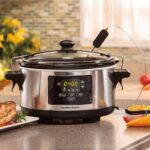

Kitchen appliances have gone through a quiet revolution over the past decade, and few tools have captured attention quite like the air fryer. What started as a niche gadget for crispy fries without the oil has expanded into a full category of countertop cooking devices, each promising faster meals with less mess. Among the newer entries into this space is the BOSWELL Glass Air Fryer, a 7.5-quart model that distinguishes itself with a transparent fry bowl and a design that leans into visibility rather than hiding the cooking process behind opaque plastic.
This article walks through what this appliance offers, how it might fit into different kitchens, and what shoppers should think about before adding one to their countertop lineup. The goal here isn’t to tell you this is the only air fryer worth considering, but to give you enough grounded information to decide whether it aligns with how you actually cook.
Introduction to the BOSWELL Glass Air Fryer
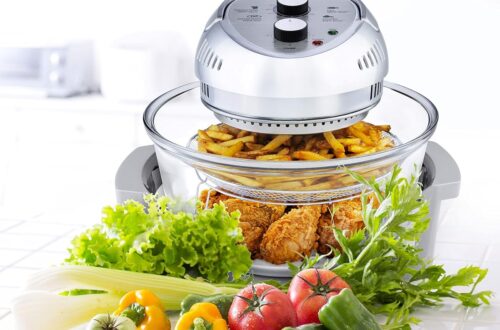
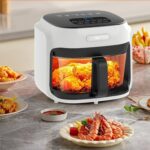
Air fryers work by circulating hot air rapidly around food, mimicking the crisping effect of deep frying while using little to no oil. Most models on the market use solid, non-transparent baskets, which means checking on your food requires pulling out the drawer and interrupting the cooking cycle. The BOSWELL Glass Air Fryer takes a different approach by incorporating a see-through glass bowl, allowing you to monitor food as it cooks without opening the unit and letting heat escape.
At 7.5 quarts, this is a mid-to-large capacity air fryer, positioning it somewhere between compact single-person models and the extra-large family-sized units. That size range tends to work well for households cooking for two to five people, or for anyone who likes to batch-cook proteins and vegetables for the week ahead.
The white finish and glass component give the appliance a look that differs from the typical black or stainless steel countertop appliance, which may appeal to people who care about how their kitchen tools look when left out on the counter.
Key Features
Transparent Fry Bowl
The standout feature of this model is the glass fry bowl. Traditional air fryer baskets are usually made of coated metal or plastic, which means you can’t see the food without opening the drawer. A transparent bowl lets you visually track browning and crisping in real time, which can be particularly useful when you’re still learning how a new appliance cooks compared to your oven or stovetop.
Circulating Heat Technology
Like most air fryers, the BOSWELL model relies on rapid air circulation to cook food evenly on all sides. This process pulls hot air around the food chamber, creating a similar texture to deep frying but with significantly less oil. Even heat distribution matters because it reduces the chances of unevenly cooked food, such as fries that are crispy on one side and soggy on the other.
Adjustable Temperature Control
Temperature control is a standard but essential feature for any air fryer, and this model allows users to adjust settings depending on what they’re preparing. Delicate items like fish or pastries typically need lower temperatures, while items like chicken wings or roasted vegetables often benefit from higher heat to achieve a crisp exterior.
Roasting Function
Beyond basic air frying, this unit includes a roast setting, which expands its usefulness beyond fries and nuggets. Roasting functions are generally designed for larger cuts of protein or vegetables that need longer, more consistent cooking at moderate temperatures, similar to how a small convection oven would operate.
Dishwasher-Safe Components
Cleanup is often cited as one of the more tedious aspects of using countertop cooking appliances, especially models with baskets that trap oil residue in hard-to-reach corners. The BOSWELL Glass Air Fryer includes dishwasher-safe parts, which can simplify maintenance for people who don’t want to hand-wash greasy components after every use.
7.5-Quart Capacity
This capacity size generally accommodates a whole small chicken, several servings of vegetables, or a batch of fries large enough for a small gathering. It’s worth noting that “quart” capacity ratings can vary in how manufacturers measure usable space, so actual food capacity may differ slightly from advertised volume once you account for airflow requirements.
How It Can Be Used
Air fryers have moved well past their original reputation as a fry-substitute gadget. Here are some practical ways a unit like this tends to get used in everyday cooking:
Weeknight proteins. Chicken thighs, salmon fillets, pork chops, and similar proteins can often be cooked faster in an air fryer than in a conventional oven, since the compact chamber heats up quickly and circulates air more efficiently around smaller cooking spaces.
Reheating leftovers. Many people find that air fryers do a better job of reviving leftover fried or roasted foods than microwaves, since the circulating heat can help restore some crispness that microwaving tends to eliminate.
Frozen foods. Items like frozen fries, mozzarella sticks, or dumplings are commonly prepared in air fryers, often requiring less monitoring than deep frying and without the mess of hot oil.
Roasted vegetables. Because this model includes a roasting function, root vegetables, Brussels sprouts, and similar produce can be cooked with a caramelized exterior without needing a full-sized oven.
Baking small batches. Some users adapt air fryers for small baked goods like muffins or biscuits, particularly when they don’t want to heat up a full oven for a small batch.
Meal prep. Given its 7.5-quart size, this air fryer may suit people who prepare multiple meals in advance, since the larger bowl can handle bigger batches than compact 2-3 quart models.
Who It May Be Suitable For
No single kitchen appliance fits every household equally well, so it helps to think about who tends to benefit most from a mid-to-large glass air fryer like this one.
Small to medium households. With a 7.5-quart capacity, this size generally works better for two to four people rather than someone cooking solo, where a smaller unit might be more space-efficient.
People who value visual monitoring. If you’re the type of cook who likes to check progress without interrupting the cooking cycle, the transparent bowl offers a practical advantage over opaque baskets.
Those looking to reduce oil usage. Air frying in general appeals to people trying to cut down on oil-heavy cooking methods while still achieving a crisp texture similar to frying.
Home cooks with limited counter or storage space who still want versatility. A single appliance that can air fry and roast may reduce the need for multiple separate gadgets, though it’s worth checking the physical dimensions against your available counter space, since glass components and larger capacities often mean a bulkier footprint.
This may be less ideal for very large families needing to cook big batches for six or more people regularly, or for those who already own a convection oven with similar air-frying capabilities and don’t need a dedicated countertop unit.
Important Things to Consider
While the transparent glass design offers visibility benefits, there are a few practical points worth thinking through before purchasing.
Weight and fragility. Glass components, while often durable and heat-resistant, tend to be heavier and more fragile than plastic-coated baskets. It’s worth considering how carefully the bowl needs to be handled during cleaning and daily use, and whether that trade-off is acceptable for your kitchen habits.
Counter space. At 7.5 quarts, this unit will likely require more counter and storage space than compact air fryers. Measuring your available space beforehand can help avoid surprises.
Heat-up and cook times. Actual cooking times can vary depending on food type, quantity, and how full the bowl is. It’s generally a good practice to check manufacturer guidelines and adjust based on your own testing, especially the first few times you use a new appliance.
Maintenance habits. Even with dishwasher-safe parts, some users prefer hand-washing glass components to reduce the risk of chipping over time, particularly if their dishwasher racks aren’t well suited to oddly shaped items.
Learning curve. Every air fryer brand behaves slightly differently in terms of heat intensity and airflow patterns. It may take a few cooking sessions to calibrate your expectations around cook times and temperature settings compared to what you’re used to with an oven or a different air fryer brand.
Comparing General Air Fryer Categories
Rather than comparing this model directly against specific competing products, it can be more useful to understand the broader categories air fryers generally fall into, so you can see where a glass, 7.5-quart model like this one fits.
Compact air fryers (2-4 quarts). These are typically designed for individuals or couples, prioritizing counter space efficiency over batch cooking capacity. They tend to heat up quickly but may require cooking in multiple batches for larger meals.
Mid-to-large air fryers (5-8 quarts). This category, where the BOSWELL model sits, tends to balance batch-cooking capability with a still-manageable footprint. These are common choices for small families or people who like preparing meals in advance.
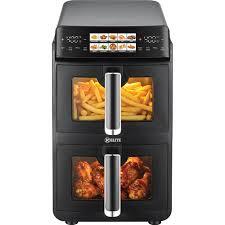
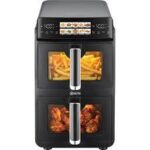
Extra-large or dual-basket air fryers (9+ quarts or multi-zone). These are generally aimed at larger households or those who want to cook multiple different foods simultaneously at different temperatures. They tend to take up significantly more space and may cost more due to added complexity.
Basket-style vs. glass/transparent-style. Traditional basket air fryers use opaque, non-stick coated interiors, which are often lighter and sometimes considered more resistant to scratching from utensils. Glass or transparent-bowl models trade some of that convenience for visual monitoring, which some users find valuable for learning how their food cooks without opening the appliance mid-cycle.
Each category has reasonable trade-offs, and the right choice generally comes down to household size, cooking habits, and how much you value being able to see your food cook in real time versus prioritizing lighter, more scratch-resistant materials.
Frequently Asked Questions
Is a glass air fryer bowl more fragile than a standard non-stick basket? Generally speaking, glass components can be more prone to chipping or cracking if dropped compared to coated metal baskets, though many are designed to be heat and impact resistant for normal kitchen use. Handling it with the same care you would a glass baking dish is a reasonable approach.
Can this air fryer replace a conventional oven? For many everyday cooking tasks like roasting vegetables, reheating food, or cooking proteins, an air fryer can serve as a smaller, faster alternative to a full oven. However, for large-batch baking or cooking very large dishes, a conventional oven will typically still have more capacity.
How does the roast function differ from the air fry function? Roasting settings are usually calibrated for slightly different heat patterns and timing suited to larger cuts of food, while air fry settings are generally optimized for smaller pieces that benefit from a crisp exterior, like fries or nuggets. Exact behavior can vary by appliance, so checking the included instructions is worthwhile.
Is a 7.5-quart capacity enough for a family? This depends on family size and cooking habits. For two to four people, 7.5 quarts is often sufficient for typical meals, though larger families or those who like cooking big batches at once might find themselves needing multiple cooking cycles.
Are all parts of the air fryer safe to put in a dishwasher? Manufacturers typically specify which components are dishwasher safe, since heating elements and certain electronic parts should never be submerged in water. It’s a good idea to review the specific care instructions provided with the unit to avoid damaging non-washable parts.
Conclusion
The BOSWELL Glass Air Fryer represents a specific take on a now-familiar kitchen appliance category, distinguishing itself primarily through its transparent glass fry bowl and a mid-to-large 7.5-quart capacity. For those who value being able to visually track their food while it cooks, and who are looking for a unit that can handle both air frying and roasting tasks, this model offers a reasonable set of features worth considering.
As with any kitchen appliance purchase, it helps to think honestly about your household size, available counter space, and cooking habits before deciding if this particular design and capacity align with your needs. No single air fryer works perfectly for every kitchen, but understanding the trade-offs between compact, mid-size, and extra-large models—along with basket-style versus glass-style designs—can make the decision process considerably easier.